
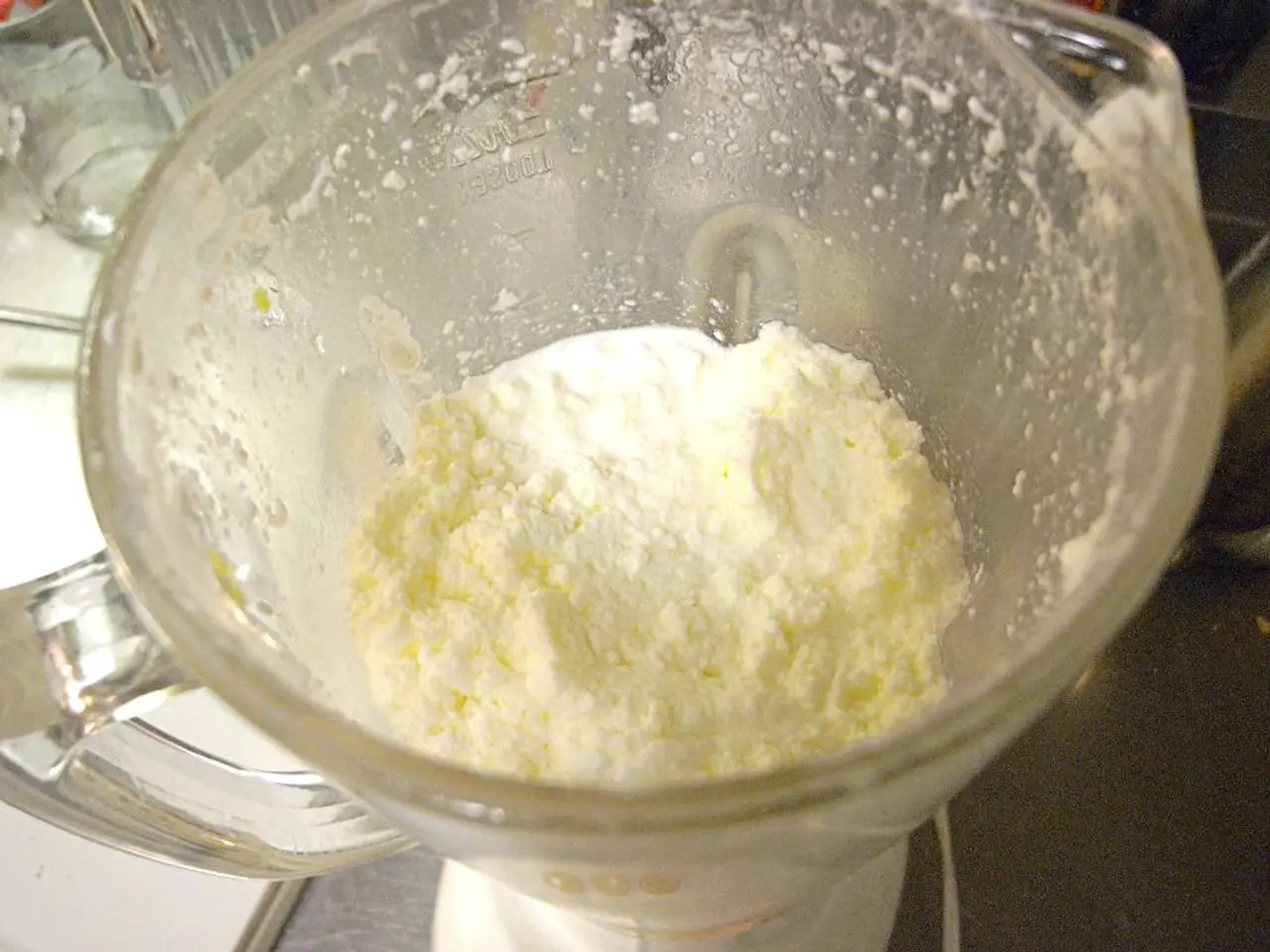
Utilizing a Blender vs. a Food Processor: Optimal Choices
In the realm of kitchen appliances, two essential tools often find themselves at the heart of culinary creations: blenders and food processors. Each serves a unique purpose, and understanding their strengths can help you make the best choice for your cooking needs.
The Vitamix Explorian E310 blender, a great value option, boasts a powerful engine and a host of preset functions. Its design relies on creating a vortex to bring food to the base, where the blades spin and generate suction. This makes it ideal for liquid-based tasks, such as making smoothies, milkshakes, and pureed soups. It can also emulsify dressings and sauces, create cocktails and frozen drinks, and even blend pancake batter for a lump-free mix ([3][5][4]).
On the other hand, a food processor is an expert at chopping ingredients quickly, helping to get to the cooking part faster. It has a short and wide container compared to a blender's tall, slender one. Its blades spin and chop, reaching more of the food in the container at one time. Food processors are versatile helpers in the kitchen, capable of chopping ingredients, slicing rounds, peeling vegetables, shredding ingredients, mixing dough, blending puddings, sauces, dips, or dressings, making stable emulsions like hollandaise sauce or mayonnaise, and even making nut butters ([1]).
Food processors often come with attachments for various tasks, such as slicing, shredding, and mixing dough. They excel at handling solid foods with varying textures, offering more versatility for these tasks than blenders ([1]).
Costs for high-quality models vary. Budget blenders typically cost £50 or less, while mid-range options start from £100. Premium blenders, like the Vitamix Explorian E310, can exceed £300. Food processors have a similar price spread, with quality models often above $100 USD ([2][4]).
In summary, use a blender for liquids, smooth purees, and drinks, and a food processor for chopping, slicing, shredding, and thicker purees. The Vitamix Explorian E310 blender retails for $379.95, and food processors, such as the Cuisinart 11-cup professional food processor and the Ninja food processor professional XL, are also available for purchase at various retailers, including Amazon.
This guidance should help optimize your kitchen tasks with the right appliance and budget considerations. Think of the types of food you see yourself making the most when deciding between a food processor and a blender. Regardless of your choice, both appliances can transform your cooking experience, making kitchen tasks more efficient and enjoyable.
In the realm of food-and-drink preparation and lifestyle, both blenders and food processors serve as crucial kitchen appliances, each offering unique advantages. The Vitamix Explorian E310 blender, a premium home-and-garden investment, flourishes in liquid-based tasks, excelling in making smoothies, pureed soups, and emulsifying dressings ([3][5][4]).In contrast, food processors shine when it comes to chopping, slicing, shredding, and tackling thicker purees, offering versatility for solid foods with varying textures ([1]).