Exploring the Ancient Art of Bonsai Trees: Tracing Their Roots Back in Time
Bonsai, a captivating art form that brings together horticulture and aesthetics, has a rich history dating back to ancient China. Originally named "penjing" in China, the term "bonsai" - derived from Japanese, meaning "planted in a shallow container" - was coined as the practice evolved and refined in Japan[1].
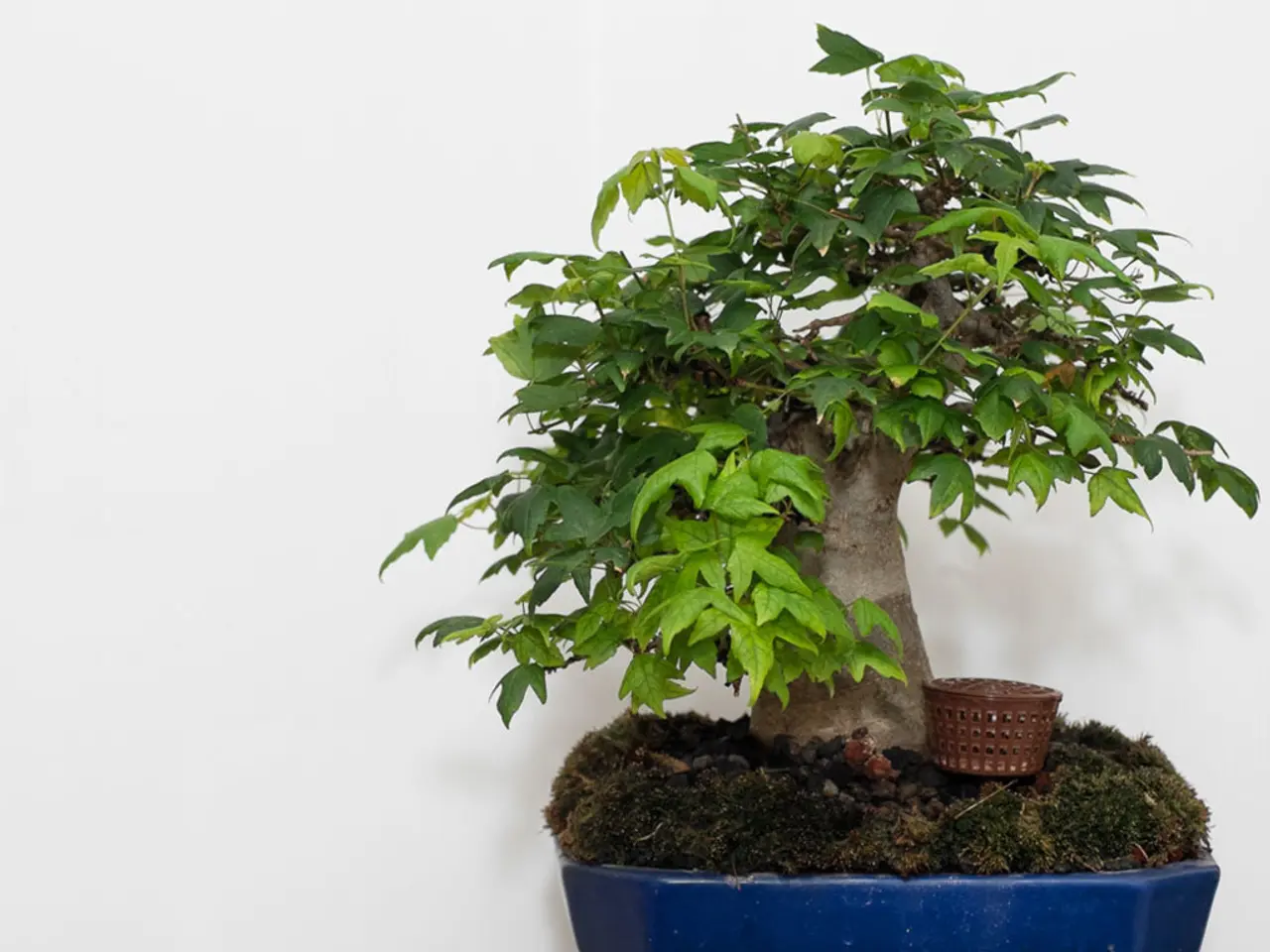
Bonsai trees, miniature replicas of trees found in nature, were initially implemented with spiritual practices like Buddhism. Over time, they became a symbol of peace, tranquillity, and the interconnection of life and nature.
The art of bonsai made its way to the West, particularly the United States, in the early 20th century. Japanese immigrants introduced bonsai to the West Coast, and after World War II, American soldiers stationed in Japan brought interest and specimens back home[2]. As cultural exchange increased, so did the popularity of bonsai.
By the late 1960s, bonsai trees had become a recognizable feature in Western culture, with dedicated nurseries and societies like the Columbus Bonsai Society in Ohio actively promoting bonsai culture[5]. Today, the platform offers resources for both beginners and those looking to hone their skills in bonsai cultivation.
The platform provides a shop for all bonsai-related needs, offering an array of tools, soil, and bonsai trees. It aims to make bonsai cultivation a passion for its users, connecting them with the beauty of this ancient art form.
Throughout history, bonsai has been linked to many other art forms of life. For instance, a juniperus procumbens bonsai tree was featured in the film The Karate Kid to reflect inner peace and the concept of peace throughout life[6].
Bonsai's journey is marked by various styles, each influenced by a piece of its history. From the formal upright style reminiscent of ancient China to the cascading style that echoes the windswept trees of Japan, each style carries a unique charm.
As bonsai trees became more recognizable everywhere due to mass production, they have transcended cultural boundaries, becoming a universal symbol of harmony between man and nature. Today, the platform continues to celebrate and nurture this timeless art form, inviting individuals to grow and maintain their very own beautiful bonsai tree.
References: [1] Lewis, D. (2018). Bonsai: A History of the Miniature Art. Shambhala Publications. [2] Sakai, T. (2004). Bonsai: The Cultured Art. Kodansha International. [3] Hodges, S. (2010). The Art of Bonsai: A Cultural History. University of Hawaii Press. [4] Sakai, T. (2011). A History of Bonsai. Tuttle Publishing. [5] Columbus Bonsai Society. (n.d.). About Us. Retrieved from https://columbusbonsai.org/about-us/ [6] The Karate Kid (1984). Directed by John G. Avildsen. Columbia Pictures.
Bonsai trees have become an integral part of home-and-garden decor, adding a touch of tranquillity and spiritual aesthetics to one's lifestyle. As the platform continues to celebrate and nurture this timeless art form, it encourages individuals to create their own home-and-garden haven with a unique bonsai tree.